Daymare Town original series review
December 6, 2025
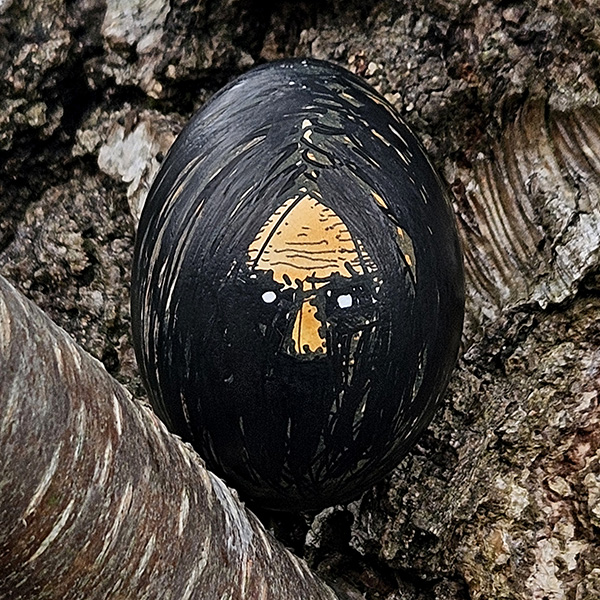
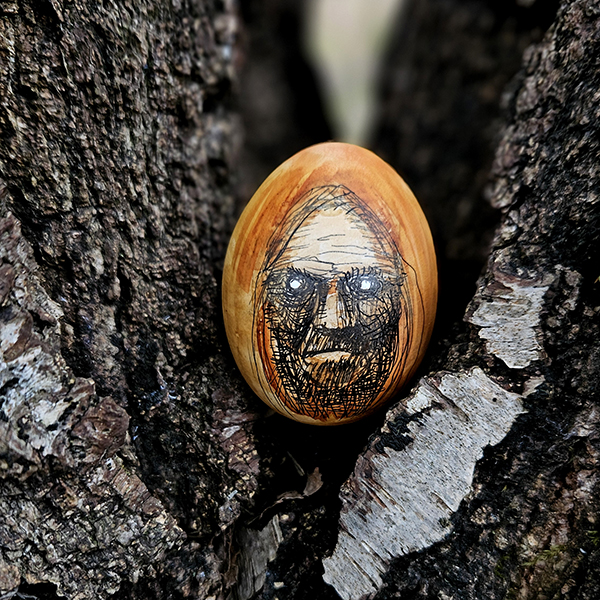
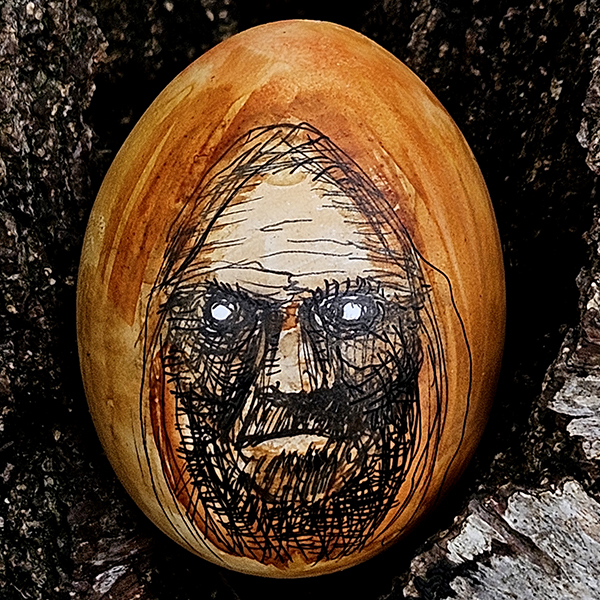
Polish graphic artist Mateusz Skutnik has designed a number of games over the years, from the sterile room-escape series Submachine to the more lighthearted puzzle-platformer Slice of Sea. Bridging the gap between these works is Daymare Town: four meaty, atmospheric point-and-click Flash games initially released between 2007 and 2013. Daymare Town‘s distinct black-and-cream-color art style can be described as “Edward Gorey meets Shel Silverstein”, with both the gloom and whimsy to match, and these illustrations make for clear, sensible puzzles that rarely need an explanation.
Daymare Town – the town – is a quiet, foggy clockwork locale, situated high on a cliff. Ominous creatures stare from the shadows, strange machines can be found around every corner, and you can step through a painting frame as easily as a doorway. Mysterious lore looms just beyond comprehension, from unknown symbols on walls to the bizarre physiology of humanoid seaweed, yet the world never becomes confusing or pretentious.
Intended for “advanced pnc gamers”, Daymare Town stands out from other first-person adventures with lots of small, subtle clickable areas. Though challenge is the name of the game, it’s seldom unfair – there’s no way to die and interactions generally don’t require leaps of logic. Skutnik clearly has a passion for hide-and-seek, as the bulk of his games feature heavy emphasis on careful exploration.
The first Daymare Town (also referred to as “Daymare Town 1: Book Alley“) starts out simple, despite the lack of a given goal. Its interface is easy to digest, and a relatively small amount of area to cover ensures that you won’t spend too long backtracking for what was missed. At first glance, Daymare Town appears to be deserted, but you’ll eventually find a few residents lurking about, and they’re a charming bunch of weirdos. This is as friendly as Daymare Town gets, in every sense of the word – after its first episode, the series’ mood skews gradually more sinister, and a forlorn NPC eventually reflects on this decline.
Though it’s the shortest of the four, Daymare Town 1 boasts a heartier experience than your average Flash game, even offering a “secret puzzle” in the form of a sidequest. There is a single in-game clue about its requirements, but in order to make sense of it, you’ll need to find at least one secret on your own. This sidequest resembles Skutnik’s series 10 Gnomes (like a tricky, desolate Where’s Waldo that’s also a mellow photo essay), and is only the first of the series’ extra challenges.
Daymare Town 2 (“Market Square“) kicks off a trend of starting where the previous game ended, going so far as to start the player with the items they would have had left over. Despite the series not having much in the way of plot, there’s enough continuity that all four games feel cohesive – elements from the first game serve as foreshadowing for 2, and there’s always a familiar face among the new ones.
Overall, Daymare Town 2 plays like a longer, creepier version of its predecessor. This time, the optional content takes the form of collectible coins, most of which you’ll need to pixel-hunt for. A few coins are mandatory for buying items, but there are more than you can possibly spend, so the bonus challenge is to max out your leftover tally at the end.
While Daymare Town 2 seemed to have a finite conclusion, Daymare Town 3 (“Lupus Square“) reveals that the player character hasn’t moved on just yet. Right away, 3 departs a bit from the first two: the player is expressly given goals for progression, and most NPCs will have something to say (more of a set dressing than a disruption to the atmosphere, as the text isn’t especially germane to the puzzles). Until now, there had only been a lonely, ever-present wind and an occasional sting of music, but 3 features a piano score by Ukrainian musician/composer Alex Voytenko. Aside from all this, there’s also an uptick in challenge (the latter two games are more likely to necessitate a walkthrough) and a look at the player character (which you’ll only see at the end).
Daymare Town 3 brings back the secondary goal of scrounging for hidden coins, but this time the monetary system requires some thought, as items can be both bought and sold – and not always for the same price. For first-time players, this may seem extremely daunting, as it’s easy to sell vital inventory and buy it back at a loss, but the game is forgiving enough with profit that it seems like a laborious (if not impossible) task to make it unwinnable.
Despite a wider selection of items, your carrying capacity in 3 is about the same as the previous two. You’ll often need to backtrack to someone who can buy your surplus, sell them whatever you don’t need right away, and then go buy the item(s) back later when you have room. After a while, you may not remember which salesperson has what, and it doesn’t help that there’s not much indication of what you’ll need with you. It’s very awkward, yet it’s not enough to spoil things. Daymare Town 3 makes up for this hiccup with plenty of content – multiple achievements give the game even more longevity, but you’ll need to figure out their secret requirements for yourself. Among these sidequests is a collection quest similar to the first game’s, now actually featuring the ten gnomes from 10 Gnomes.
Bidding farewell to the town for good, Daymare Town 4 (“Fog Trench“) presents a very different backdrop: a cliffside desert wasteland. Though there are still plenty of indoor settings to explore, the vast outdoor environments require even more effort than usual to figure out where you can and can’t go. The narrative offers several reminders that you’re not really in Daymare Town anymore – the currency has changed from coins to spotted pebbles, and in a subversion of the “friendly wandering stranger protagonist” cliché, some NPCs will refuse your help and tell you to go away.
Where the first three games conveyed their gloom mostly through images and sound, 4 swaps the gesturing, rebuses, and one-line comments for somber conversations. There still isn’t a huge amount of text, but some parts rely on dialogue to be understood. The buy/sell mechanic isn’t any different in 4, but a backpack item mitigates 3‘s inventory problem, providing ample space without cluttering the HUD. For even more convenience, there are teleporters that save time when backtracking. Between its user-friendliness, its eerie and detailed new world, more of Voytenko’s piano accompaniment, and a crazy new set of secret achievements, Daymare Town 4 keeps the series fresh and makes for a solid finale.
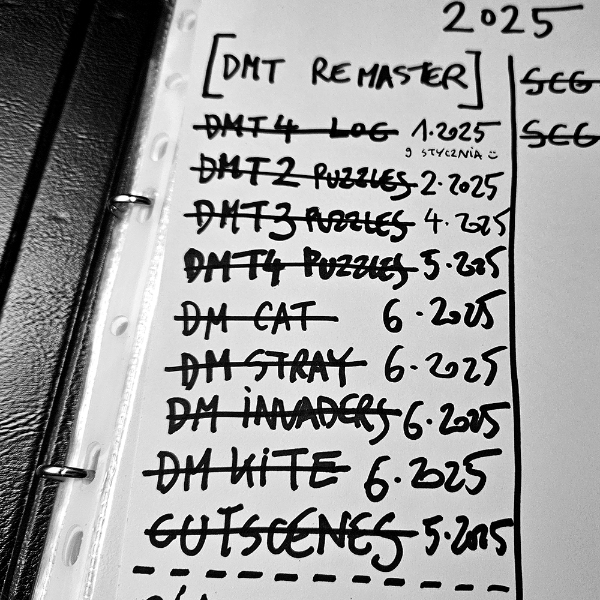
Unlike the previous games, Daymare Town 4 was initially released in two flavors: a free browser version and a buyable HD version. The other three were later remastered to the same presentation standards, and eventually, these updated versions (and four spin-off games) were compiled as the Daymare Town Complete Collection. Beyond graphical improvement, the HD versions boast a cleaner, more unified interface and text that’s easier to read, and the remastered versions of 3 and 4 also include audio files of their respective soundtracks.
The Daymare Town spin-offs aren’t quite comparable to the numbered titles – Daymare Town Complete Collection files them as “minigames”. The most substantial of these is Daymare Cat, a puzzle-platformer named after Canadian musician Cat Jahnke. Jahnke’s music plays via collectible records that act as keys – each of these is a portion of her haunting song “Better”, and winning provides you with a link to download the full track for free. A 10th anniversary version of Daymare Cat was recently released, providing visual enhancement and making the player character a bit zippier. According to an interview, Jahnke was already a fan of Skutnik’s before they connected – Daymare Cat came into being after she reached out with an offering of banana bread.
Daymare Cat paved the way for Skutnik’s standalone game Slice of Sea, which features a similar presentation and another song by Jahnke. Those aren’t the only Daymare Town parallels, though – Slice of Sea’s protagonist is one of the seaweed creatures from Daymare Town 4, and there are possible background connections from mysterious symbols to the bones of giants.
The other platformer among the spin-offs, Daymare Stray, isn’t too different from Daymare Cat, but instead of a human protagonist, we have a critter who looks a bit like the penguin monsters from Final Fantasy VII. Significantly shorter than Daymare Cat, Daymare Stray is an altered version of Where is 2010?, an entry in Skutnik’s annual Where is the New Year?… series, with Daymare Town-appropriate sound effects and Baby New Year swapped out. Currently, Daymare Cat and Daymare Stray are free to download.
The other two spin-offs are single-screen arcade-style affairs. Daymare Kite sees the kite-flying kid from Daymare Town 2 guiding their kite away from aggressive birds – the kite follows your mouse cursor. Bonus points are awarded for collecting germ-like pickups and luring the birds into nets. Daymare Invaders, meanwhile, is Space Invaders in Daymare Town style, starring the penguin-like creature from Daymare Stray. Though the aliens are still aliens, the smoking giant from Daymare Town 2 replaces the bonus UFO, and their appearances here and in Daymare Cat seem to cement them as a series mascot. Like the other games, Daymare Kite and Daymare Invaders appear to have been retouched, but don’t seem to have any significant differences.
Outside of the gaming medium, the comic series Morfołaki (“Morphs”, drawn by Skutnik and written by Nikodem Skrodzki) received an offshoot called Daymare Morphs which preceded the first game by several years. These short comics share the games’ visual style, but not a whole lot else – on top of their more philosophical tone, there’s a good deal of nudity and graphic violence. Artwork from these comics appears as portraits in Daymare Town 2, but as with Slice of Sea, it’s unclear just how connected these universes are meant to be.
It’s hard to believe these are the same character – the smaller version looks kind of darling.
From a distance, you might mistake Daymare Town with Bad Dream, a more recent point-and-click series with a similar aesthetic. Bad Dream‘s visuals are much more basic, and while gore and jump scares place these games in a different category, both series are first-person adventures with monochrome line art, dreary vibes, and maggots and leeches as usable items.
As of this writing, Daymare Town has been announced on Steam with a TBA release date. The trailer makes it out to be another upscaling of the first game, featuring remade artwork – however, screenshots depict some scenes that look quite a bit different from what we’ve seen so far. What’s certain is that Voytenko is providing the music once again, and it looks as though we may be seeing the gnomes again as well.
An excellent point of entry for casual and seasoned adventurers alike, Daymare Town gives meaning to a no-walkthrough run. Despite being relics of the Flash era, the games don’t show their age, and thanks to the remasters, they’re more playable now than ever. For anyone who associates the browser gaming boom with crude ripoffs and licensed dreck, Daymare Town is a solid counterpoint, standing side-by-side with other Flash greats like Frog Fractions, the Crimson Room series, and Fly Guy.


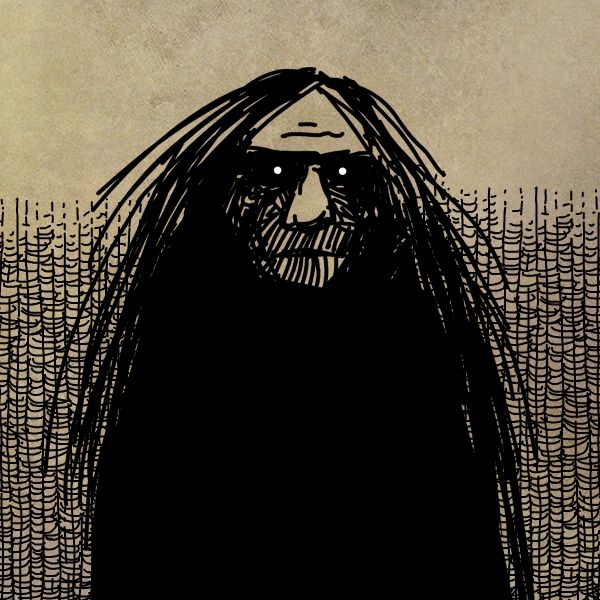
 Czasami człowiek orientuje się, że czegoś mocno mu brakowało dopiero wtedy, kiedy ponownie się z tym czymś zetknie. Tak poczułem się w trakcie lektury “Ostatniego Blakiego” Mateusza Skutnika. Z pierwszym albumem o Panu Blakim (komiksy o nim współtworzył wtedy Karol Konwerski) polscy czytelnicy mogli się zapoznać już dwadzieścia lat temu. Krótkie historie o lubującym się w rozważaniach, ubranym na czarno jegomościu ze spiczastymi uszami ujmowały urokliwym zderzeniem filozofii ze życiem codziennym. Połączenie czarnego humoru i narzekań na codzienność z poetycką aurą zawsze wychodziły Skutnikowi znakomicie. “Blaki Czwórka” ukazał się w 2014 roku, więc większość z nas myślała, że autor już na zawsze porzucił swoje alter ego. Jednak oto mamy dowód, że postanowił wrócić do niego po raz ostatni (osobiście mam nadzieję, że to jednak nieprawda). Blaki jest odpowiednio starszy i jeszcze częściej myśli o przemijaniu oraz walce z poczuciem bezsensowności działań. Egzystencjalnego smutku jest tu więcej, ale pojawiają się także chwile zachwytu z najprostszych spraw, jak chociażby spędzania czasu z rodziną. Skutnik dalej potrafi świetnie uderzyć w sedno problemów “każdego z nas” używając do tego swojego charakterystycznego rzewnego stylu narracji. Bardzo lubię emocjonalny stan, w jaki wprawiają mnie te komiksy — coś pomiędzy “trochę z niego maruda” a “kurde, jednak ma chłop rację”. Polecam wrażliwcom, szczególnie tym miewającym problemy z wyrażaniem emocji wprost. Pan Blaki Was wszystkich rozumie. Mieszkańcy Gdańska Wrzeszcza mogą ten komiks docenić jeszcze bardziej, bo pewnie rozpoznają znajome uliczki i budynki.