Daymare Town, review on Adventure Game Hotspot


Fans of Mateusz Skutnik’s unique vision will feel right at home in this compellingly twisted four-game compilation.

Daymare Town began life as a series of free Flash games released from 2007 to 2013, developed by Mateusz Skutnik alongside his cult hit Submachine series. After the latter’s stellar commercial glow-up earlier this decade, it seemed a no-brainer that Daymare Town would follow eventually. Now it’s here, with all four entries neatly integrated into a single cohesive package with new puzzles and characters, fully redrawn art, and a complete soundtrack by composer Alex Voytenko. Whether or not you’ve played the originals, this omnibus edition represents Skutnik’s definitive version, and as has become the norm for him, it’s a jaw-droppingly beautiful blend of exploration, scavenger hunting, and puzzle-solving that rewards patience, care, and attention to detail (albeit in sometimes Herculean volumes).

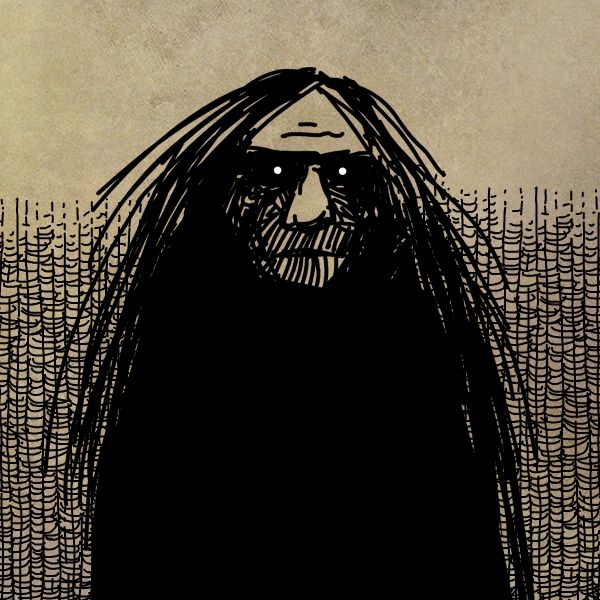
The game begins with a short spoken preamble from your character, a wild-haired man with no name or apparent backstory: “Our darkness is fading. As the fog encroaches, there’s nothing we can do but leave this town, forever…” These lines, the game’s only voiced dialogue, are the last semblance of an authoritative take on what’s happening in this world. Immediately afterward, the man exits to a plaza of the titular town, with no directive except to find his way beyond the city limits and no direction for how to do so except to keep his eyes open. The perspective shifts to first-person and control passes to the player; from here, your objectives are simply to see, do, and progress as best you can.

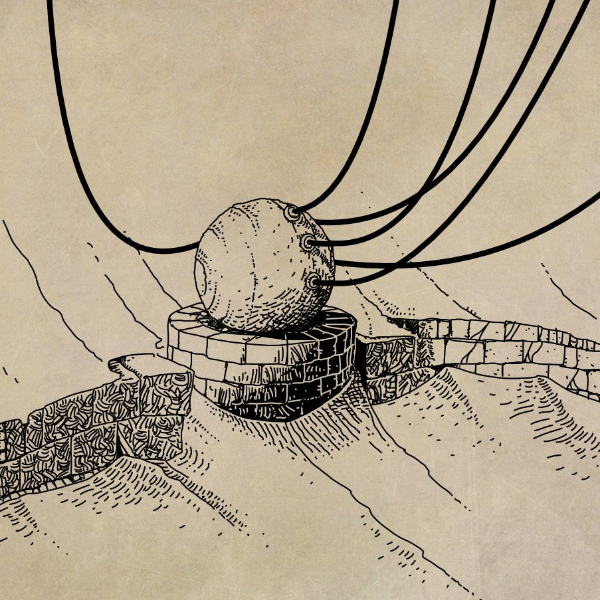
The first thing you’re liable to notice is the absence of color. Nearly everything on-screen is either black or beige, with grabbable items appearing in white to distinguish them from the backgrounds. (There’s a hard mode that turns this setting off; it otherwise plays identically.) The effect, in concert with the deliberate sketch-like character of Skutnik’s pen-and-ink illustrations, is of having fallen into the pages of some forgotten Edwardian fantasy tome. This is our world as glimpsed in the moments between waking and sleeping, or reflected just over one’s shoulder in a warped and foggy mirror. There’s an Alice in Wonderland quality to your wanderings, with bizarre creatures and surreal situations materializing in full and sudden flower without warning, context, or attempt to justify them: birds talk; fishermen cast their lines into empty air; paintings invite you to enter and walk around.

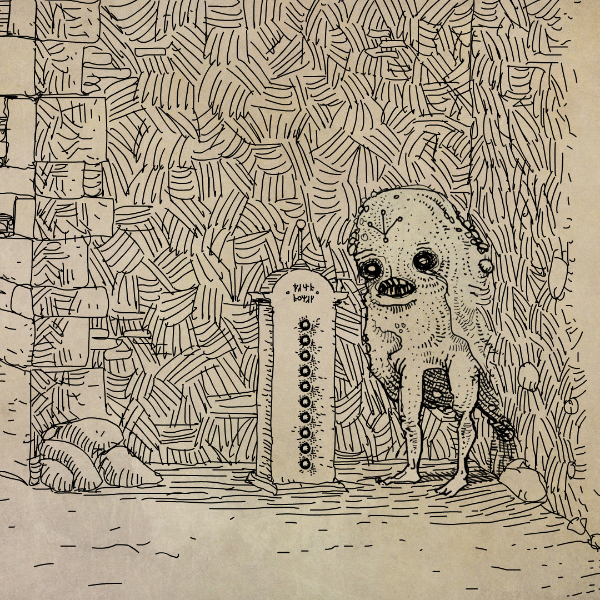
Some of the town’s inhabitants are recognizably human, but many aren’t. Hairy, large-eyed critters abound, huddling in nooks and alcoves or lingering alone or in pairs behind closed doors. Others appear variously reptilian, mammalian or even plant-like. (You’ll recognize one group of neighbors immediately if you’ve played Skutnik’s Slice of Sea.) There are whispers of giants and dragons lurking somewhere in the mist, and of stranger things than those. The imagery exists somewhere at the intersection of Mervyn Peake’s sketches, James Thurber’s cartoons, and the charcoal drawings of Odilon Redon, with messy, unruly silhouettes rendered nonetheless comprehensible by Skutnik’s meticulous precision in line and point. As befits the material, what we see seems always to have materialized from within a thickening fog. From start to finish, it’s never anything short of breathtaking to look at.

The fog, of course, is one of the main topics of discussion for those still in town, and you’ll hear many rumors about it in your travels—that it leaves nothing but empty space in its wake; that it claimed another two houses yesterday; that there’s nowhere left to escape to. There are no clear answers, only guesses and snatches of uncertain hearsay; society in town hasn’t quite broken all the way down, but it’s circling the drain, and those who remain have lost the will to work together in charting a way forward. Certain institutions keep operating—the Museum of Modern Art still charges admission, and St. George’s Hospital ministers to patients even while doing a lively trade in illicit drug sales—but others, like a grisly meat market or a tumbledown library, have been left to the scavengers.

The town’s decrepitude means guideposts are few and far between. Some characters will engage you in conversation, at which point a simple menu lets you select responses until they run out, but most people only deliver a single line of dialogue when you click or hover over them. Their speech tends toward the indirect and allusive, as do the various signs and graffiti scattered about. You’ll often have to speak to several characters to get a clear picture of your next goal or destination. Other times the game leaves it entirely up to you to keep going until you run up against an obstacle and deduce that it’s what you should focus on.

The more you explore, the more you’ll learn about the town, its inhabitants, and their efforts to either escape the fog or accept it. As oblique as the execution is, there’s a definite story to follow from beginning to end. You’ll learn next to nothing about your own character’s history beyond his desire to leave town, but he emerges in conversations as a curious if somewhat withdrawn observer of his world, living lightly while treating others with a tired sort of compassion. How the locals respond to him will teach you as much as what they say: some are lost and frightened; others relish company of any kind; many carry on in a resigned, weary state between denial and acceptance. The thought of such a fate seems to impel your character to seek an exit as much as the oncoming fog does.

Movement is node-based, with a context-sensitive cursor that points in the direction you’ll exit. A hand cursor indicates an item to be picked up, while a magnifying glass takes you in for a closer look at something. An indicator appears over hotspots where you can use an item from your inventory, which you access by right-clicking and selecting an object to drag into the environment. There are also many “invisible” hotspots, where secret optional actions are possible if you experiment with what you have (say, by using that hammer you found on a fragile-looking vase).

On top of this, there are various collectibles scattered throughout each of the four chapters for you to hunt down if the mood strikes, along with optional arcade minigames you can access through cabinets hidden around town. These explain their controls and objectives upfront, and they’re mostly fun and simple diversions—a fog-themed Space Invaders clone, for instance, or a game where you avoid incoming birds as you fly a kite—but there’s also a surprisingly elaborate puzzle-platformer that could be classed as a mini-adventure in its own right, which unlocks a fantastic musical track by singer Cat Jahnke.

While your tasks tend to be straightforward—taking missing objects back to where they belong, collecting puzzle pieces to open locks, finding something to trade a character whose item you need—the challenge often lies in just identifying and tracking down what you’re actually looking for. I’d estimate there are more than a thousand screens to cover, each one chock full of elaborate visual detail with no color to break it up. Even in relatively uncluttered rooms, I sometimes overlooked what turned out to be important details. Still, this sets up a number of immensely satisfying a-ha! moments in which you’ll suddenly recognize, at long last, the one element missing from a puzzle that’s nagged at you for hours.

Everywhere you look, there’s more to see and do; it’s almost never boring, but next steps are rarely obvious. The first screen alone has eleven exits, and only some of them are apparent right away. There are many, many transition points throughout the game that you’ll only discover by carefully moving your cursor and paying attention to where it points. The same is true of hotspots, which may not distinguish themselves from other background elements. Skutnik’s art is painstakingly detailed, but it’s hard to tell at a glance what’s there because you need it and what’s just a part of the picture.

All of this is in keeping with the game’s intentions. The focus is as much on experiencing the environment to the fullest and moving on once you’ve had your fill as it is on making tangible progress. In its storytelling, puzzle solving, and exploration, the game’s watchword seems to be delayed gratification. It’s especially apparent in the sheer amount of surprises and hidden interactions secreted about the place for you to discover; they’re never necessary to progress, but they reward experimentation and encourage you to adopt a playful “I wonder what happens if…” attitude.

That said, the game world you’ll traverse across the four combined episodes is huge, and when you factor in all the secrets concealed beneath the surface, there’s actually more of it than it initially seems. If you don’t like retracing your steps while pondering the small details you might have missed, Daymare Town will probably drive you bonkers. There’s a world map, but it’s not very detailed, and while a system of portals lets you warp from one region to another, you have to find and activate each one, with several tucked away in unassuming crevices that you might not notice at first glance. Here even the fast-travel system requires time and patience to use properly.

Even if you love what the game is doing, there’s just so much of it that at a certain point it starts to feel exhausting. The environments are beautiful, but when you’ve spent roughly eight hours traversing hundreds of cluttered, colorless slides, things have a way of blending together in your memory. Considering how easy it already is to overlook inconspicuous but crucial screen exits, this can turn navigation from a challenge into a nightmare. I very much wanted to see more of the game’s unique world, but I found myself longing for a bit less space to see it in.

Still, in a game about searching for an exit that might not exist, the sensation of bewildered overwhelm feels not only appropriate but intentional. Every choice—the monochrome visuals, the ominous atmosphere, the mournful, desolate piano score—feels deliberately calculated to inspire those very feelings. Of course, when you’re wandering in circles without a clue where to go next, it might not make much difference to know that it’s on purpose. If that means Daymare Town occasionally feels like a victim of its own success, though, then “success” is still very much the operative word.
Final Verdict

Daymare Town isn’t a game you play to unwind, or that you can spend a casual half-hour with while waiting for the oven to beep. It’s deep, dark, dense, and daunting; even if you enjoy dancing to its tune, it might tire you out after a while. All the same, it’s hard to pull yourself away once you’ve started exploring its many nooks and crannies. The tantalizingly bizarre world is so captivating—with its chaotically beautiful artwork; its subtle, mysterious narrative; and its wealth of secrets waiting to be discovered—that even when you aren’t sure what to do, you’re glad for the chance to find out.

Hot take: 85%

If you can get on its distinctively weird, oppressive wavelength and stay there, you’ll find Mateusz Skutnik’s Daymare Town second to none in terms of atmosphere, aesthetics, and ability to keep you clicking just to find out what the impossibly imaginative setting will show you next.

Pros

  • Beautifully strange and compelling visual aesthetic
  • Art, music, and gameplay unite to create an atmosphere of mingled wonder, intrigue, and lonesome foreboding
  • Packed full of things to do, see, and figure out, including secrets and optional challenges galore
  • Rewards for patient exploration are incredibly gratifying

Cons

  • So big and busy, with so little signposting, that it’s easy to get lost, overwhelmed, and/or exhausted
  • Requires so MUCH patience that it can easily become frustrating
Will Aickman on adventuregamehotspot.com


Daymare Town original series review


Polish graphic artist Mateusz Skutnik has designed a number of games over the years, from the sterile room-escape series Submachine to the more lighthearted puzzle-platformer Slice of Sea. Bridging the gap between these works is Daymare Town: four meaty, atmospheric point-and-click Flash games initially released between 2007 and 2013. Daymare Town‘s distinct black-and-cream-color art style can be described as “Edward Gorey meets Shel Silverstein”, with both the gloom and whimsy to match, and these illustrations make for clear, sensible puzzles that rarely need an explanation.

Daymare Town – the town – is a quiet, foggy clockwork locale, situated high on a cliff. Ominous creatures stare from the shadows, strange machines can be found around every corner, and you can step through a painting frame as easily as a doorway. Mysterious lore looms just beyond comprehension, from unknown symbols on walls to the bizarre physiology of humanoid seaweed, yet the world never becomes confusing or pretentious.

Intended for “advanced pnc gamers”, Daymare Town stands out from other first-person adventures with lots of small, subtle clickable areas. Though challenge is the name of the game, it’s seldom unfair – there’s no way to die and interactions generally don’t require leaps of logic. Skutnik clearly has a passion for hide-and-seek, as the bulk of his games feature heavy emphasis on careful exploration.

The first Daymare Town (also referred to as “Daymare Town 1: Book Alley“) starts out simple, despite the lack of a given goal. Its interface is easy to digest, and a relatively small amount of area to cover ensures that you won’t spend too long backtracking for what was missed. At first glance, Daymare Town appears to be deserted, but you’ll eventually find a few residents lurking about, and they’re a charming bunch of weirdos. This is as friendly as Daymare Town gets, in every sense of the word – after its first episode, the series’ mood skews gradually more sinister, and a forlorn NPC eventually reflects on this decline.

Though it’s the shortest of the four, Daymare Town 1 boasts a heartier experience than your average Flash game, even offering a “secret puzzle” in the form of a sidequest. There is a single in-game clue about its requirements, but in order to make sense of it, you’ll need to find at least one secret on your own. This sidequest resembles Skutnik’s series 10 Gnomes (like a tricky, desolate Where’s Waldo that’s also a mellow photo essay), and is only the first of the series’ extra challenges.

Daymare Town 2 (“Market Square“) kicks off a trend of starting where the previous game ended, going so far as to start the player with the items they would have had left over. Despite the series not having much in the way of plot, there’s enough continuity that all four games feel cohesive –  elements from the first game serve as foreshadowing for 2, and there’s always a familiar face among the new ones.

Overall, Daymare Town 2 plays like a longer, creepier version of its predecessor. This time, the optional content takes the form of collectible coins, most of which you’ll need to pixel-hunt for. A few coins are mandatory for buying items, but there are more than you can possibly spend, so the bonus challenge is to max out your leftover tally at the end.

While Daymare Town 2 seemed to have a finite conclusion, Daymare Town 3 (“Lupus Square“) reveals that the player character hasn’t moved on just yet. Right away, 3 departs a bit from the first two: the player is expressly given goals for progression, and most NPCs will have something to say (more of a set dressing than a disruption to the atmosphere, as the text isn’t especially germane to the puzzles). Until now, there had only been a lonely, ever-present wind and an occasional sting of music, but 3 features a piano score by Ukrainian musician/composer Alex Voytenko. Aside from all this, there’s also an uptick in challenge (the latter two games are more likely to necessitate a walkthrough) and a look at the player character (which you’ll only see at the end).

Daymare Town 3 brings back the secondary goal of scrounging for hidden coins, but this time the monetary system requires some thought, as items can be both bought and sold – and not always for the same price. For first-time players, this may seem extremely daunting, as it’s easy to sell vital inventory and buy it back at a loss, but the game is forgiving enough with profit that it seems like a laborious (if not impossible) task to make it unwinnable.

Despite a wider selection of items, your carrying capacity in 3 is about the same as the previous two. You’ll often need to backtrack to someone who can buy your surplus, sell them whatever you don’t need right away, and then go buy the item(s) back later when you have room. After a while, you may not remember which salesperson has what, and it doesn’t help that there’s not much indication of what you’ll need with you. It’s very awkward, yet it’s not enough to spoil things. Daymare Town 3 makes up for this hiccup with plenty of content – multiple achievements give the game even more longevity, but you’ll need to figure out their secret requirements for yourself. Among these sidequests is a collection quest similar to the first game’s, now actually featuring the ten gnomes from 10 Gnomes.

Bidding farewell to the town for good, Daymare Town 4 (“Fog Trench“) presents a very different backdrop: a cliffside desert wasteland. Though there are still plenty of indoor settings to explore, the vast outdoor environments require even more effort than usual to figure out where you can and can’t go. The narrative offers several reminders that you’re not really in Daymare Town anymore – the currency has changed from coins to spotted pebbles, and in a subversion of the “friendly wandering stranger protagonist” cliché, some NPCs will refuse your help and tell you to go away.

Where the first three games conveyed their gloom mostly through images and sound, 4 swaps the gesturing, rebuses, and one-line comments for somber conversations. There still isn’t a huge amount of text, but some parts rely on dialogue to be understood. The buy/sell mechanic isn’t any different in 4, but a backpack item mitigates 3‘s inventory problem, providing ample space without cluttering the HUD. For even more convenience, there are teleporters that save time when backtracking. Between its user-friendliness, its eerie and detailed new world, more of Voytenko’s piano accompaniment, and a crazy new set of secret achievements, Daymare Town 4 keeps the series fresh and makes for a solid finale.

Unlike the previous games, Daymare Town 4 was initially released in two flavors: a free browser version and a buyable HD version. The other three were later remastered to the same presentation standards, and eventually, these updated versions (and four spin-off games) were compiled as the Daymare Town Complete Collection. Beyond graphical improvement, the HD versions boast a cleaner, more unified interface and text that’s easier to read, and the remastered versions of 3 and 4 also include audio files of their respective soundtracks.

The Daymare Town spin-offs aren’t quite comparable to the numbered titles – Daymare Town Complete Collection files them as “minigames”. The most substantial of these is Daymare Cat, a puzzle-platformer named after Canadian musician Cat Jahnke. Jahnke’s music plays via collectible records that act as keys – each of these is a portion of her haunting song “Better”, and winning provides you with a link to download the full track for free. A 10th anniversary version of Daymare Cat was recently released, providing visual enhancement and making the player character a bit zippier. According to an interview, Jahnke was already a fan of Skutnik’s before they connected – Daymare Cat came into being after she reached out with an offering of banana bread.

Daymare Cat paved the way for Skutnik’s standalone game Slice of Sea, which features a similar presentation and another song by Jahnke. Those aren’t the only Daymare Town parallels, though – Slice of Sea’s protagonist is one of the seaweed creatures from Daymare Town 4, and there are possible background connections from mysterious symbols to the bones of giants.

The other platformer among the spin-offs, Daymare Stray, isn’t too different from Daymare Cat, but instead of a human protagonist, we have a critter who looks a bit like the penguin monsters from Final Fantasy VII. Significantly shorter than Daymare Cat, Daymare Stray is an altered version of Where is 2010?, an entry in Skutnik’s annual Where is the New Year?… series, with Daymare Town-appropriate sound effects and Baby New Year swapped out. Currently, Daymare Cat and Daymare Stray are free to download.

The other two spin-offs are single-screen arcade-style affairs. Daymare Kite sees the kite-flying kid from Daymare Town 2 guiding their kite away from aggressive birds – the kite follows your mouse cursor. Bonus points are awarded for collecting germ-like pickups and luring the birds into nets. Daymare Invaders, meanwhile, is Space Invaders in Daymare Town style, starring the penguin-like creature from Daymare Stray. Though the aliens are still aliens, the smoking giant from Daymare Town 2 replaces the bonus UFO, and their appearances here and in Daymare Cat seem to cement them as a series mascot. Like the other games, Daymare Kite and Daymare Invaders appear to have been retouched, but don’t seem to have any significant differences.

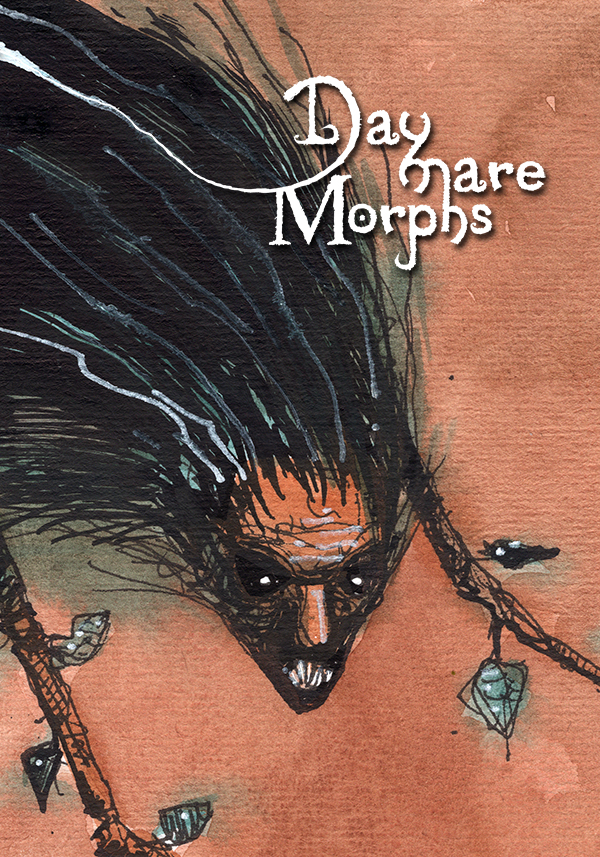
Outside of the gaming medium, the comic series Morfołaki (“Morphs”, drawn by Skutnik and written by Nikodem Skrodzki) received an offshoot called Daymare Morphs which preceded the first game by several years. These short comics share the games’ visual style, but not a whole lot else – on top of their more philosophical tone, there’s a good deal of nudity and graphic violence. Artwork from these comics appears as portraits in Daymare Town 2, but as with Slice of Sea, it’s unclear just how connected these universes are meant to be.

It’s hard to believe these are the same character – the smaller version looks kind of darling.

From a distance, you might mistake Daymare Town with Bad Dream, a more recent point-and-click series with a similar aesthetic. Bad Dream‘s visuals are much more basic, and while gore and jump scares place these games in a different category, both series are first-person adventures with monochrome line art, dreary vibes, and maggots and leeches as usable items.

As of this writing, Daymare Town has been announced on Steam with a TBA release date. The trailer makes it out to be another upscaling of the first game, featuring remade artwork – however, screenshots depict some scenes that look quite a bit different from what we’ve seen so far. What’s certain is that Voytenko is providing the music once again, and it looks as though we may be seeing the gnomes again as well.

An excellent point of entry for casual and seasoned adventurers alike, Daymare Town gives meaning to a no-walkthrough run. Despite being relics of the Flash era, the games don’t show their age, and thanks to the remasters, they’re more playable now than ever. For anyone who associates the browser gaming boom with crude ripoffs and licensed dreck, Daymare Town is a solid counterpoint, standing side-by-side with other Flash greats like Frog Fractions, the Crimson Room series, and Fly Guy.

written by Dodol No. 1


Daymare Town verified on Steam Deck


Did you know you can take DMT on your trip?
Daymare Town is now fully verified on Steam Deck!


Daymare Town 2025, m_garland review


This is a game I’ve always imagined but never thought would become reality. It’s even better than I imagined, actually.

I think there’s something magic here you’ve touched upon. Aesthetically, there’s an inherent charm to hand-drawn media. The minimal line work makes the mind create more with what little is given in way of detail. This is a prime example of the fact that cartooning is an art form that has so much to offer video games, especially in an age of ruthlessly digital attempts at hyper-realism.

Also, great use of a monochromatic palette. It really gives the feeling as if you’re playing a game on a piece of paper. It’s underground comix come to life. What an idea! The art style overall brings that strange, paradoxical air of being confined within an uncanny spaciousness. Perfect for a series of point-and-click puzzles.

m_garland


Daymare Town 2025


Get this game: | directly from me | Steam | Itch.io | gog.com

 story trailer | gameplay trailer | arcade trailer

New things: the Blend | the Ornament | wallpapers

reviews: m_garland | Steam reviews | Adventure Game Hotspot

Jacob Forster playthrough: part 1 | part 2 | part 3

Steam Deck verified

the World of Daymare

Daymare Town is a hand-drawn puzzle adventure game. You find yourself in a heart of a strange city populated by peculiar Metamorph creatures. This town is full of nooks and crannies, puzzles, secrets and items to collect to help you along the way. Can you escape the nightmare of a day?

Story

You are not alone here. You will meet peculiar daymare inhabitants. Some of them will help you, some need your help. Almost everyone has a story. You can choose to learn those stories if you just listen or look carefully at the environmental story telling.

Puzzles

You will have to dive deep into the nooks and crannies of this town in order to solve all its mysteries and puzzles, of which are plenty. The better part of them will have you fighting the entropy of a town, bringing back signal to noise. There are also creatures here that need your help, look at them closely to learn who they are and what they need from you. You will have an inventory of items to use while solving puzzles.

Graphics

Entire game is hand-drawn. There’s nothing auto-generated nor procedural. There’s no AI used in any capacity. Each location was thoughtfully designed. Its stylized and sketchy character emphasizes the eerie atmosphere of an unshaped nightmare you found yourself in.

Music

Piano music for this game was created by contemporary composer Alex Voytenko. His style of music perfectly emphasizes the atmosphere of unspoken madness permeating this town.


Daymare remastered timestamp


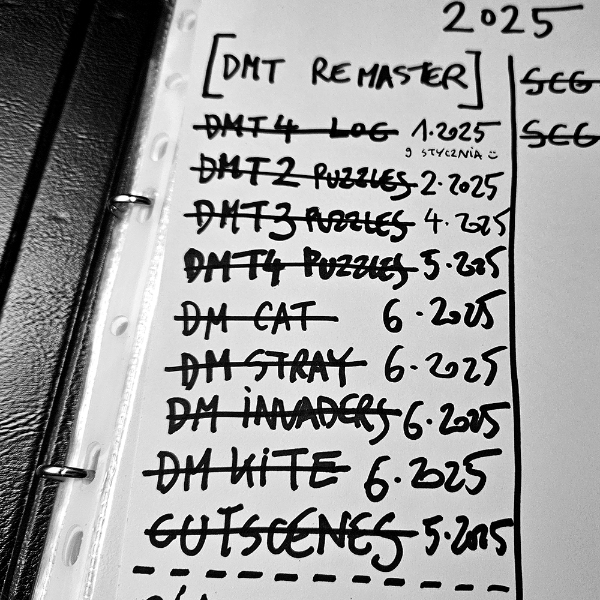
Everything that was ever created in the Daymare Town series is as of today remastered.
Every puzzle, location, minigame and animation.
Is this the end? No, not really.
Now the fun part begins.
New stuff, puzzles, locations, creatures, collectibles, achievements, lore and so on.
I will spend July and August expanding the game.
Unfortunately – I won’t be able to show you any of this…
Hang on! :D


GOG init timestamp


~~

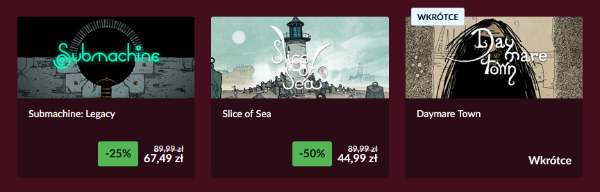
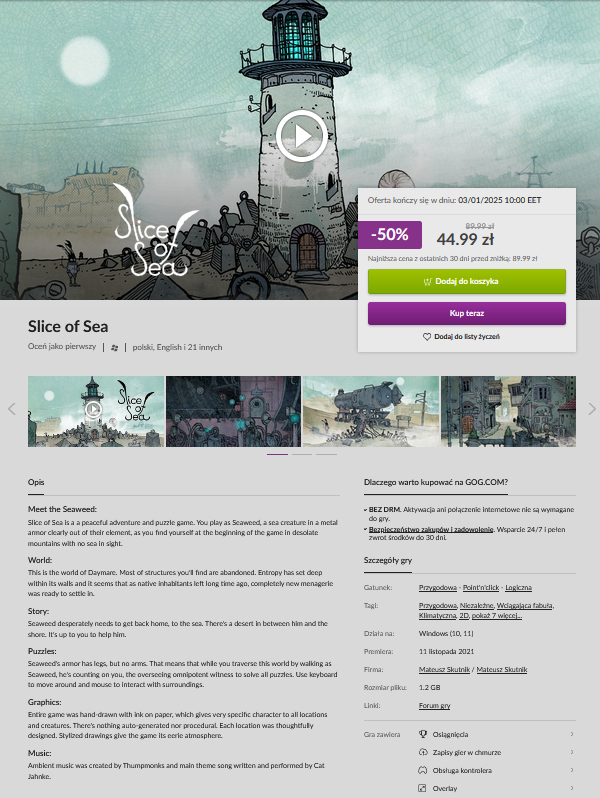
Today my games found a new home on GOG. This is not only just another platform to host them, for me, personally it’s a badge of honor to be included in their library. You can get them there with a hefty discount, since it’s their winter sale right now.

~~

Mieć swoje gry na GOGu – to brzmi dumnie. To był dobry dzień dzisiaj, idę poświętować. Akurat zaczęła się u nich wyprzedaż zimowa, w której te moje gry też są uwzględnione, więc polecam. Najlepiej pod choinkę wszystkim dzieciom i znajomym.


Daymare Town ornament


the Blend


Daymare Morphs eBook


watch youtube trailer


Next Page »