Sandman


I found this old sketch while browsing through some old backup cd’s. It’s a real blast from the past, but good enough to share with you. I created this in 2004 I believe, Neil Gaiman was visiting Poland back then and there was an exhibition of Sandman drawings created by polish comic artists. So that’s my contribution.
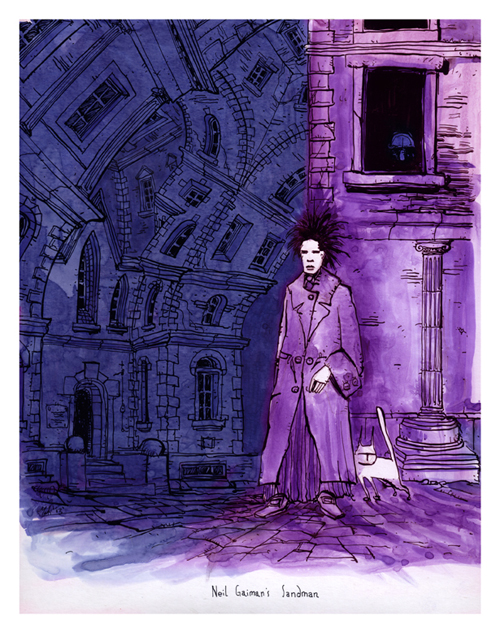
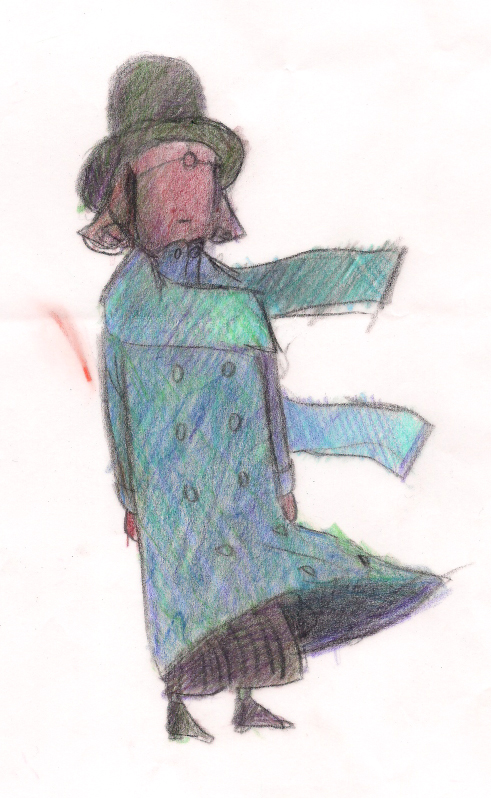
sandman1


the Autumn is here


So I’ve been drawing with my daughter lately, she does her scribblings while I do mine, using her crayons. Here’s what came out lately. That red smudge is of her doing, I did not dare to remove that in photoshop.

autumn_crayons


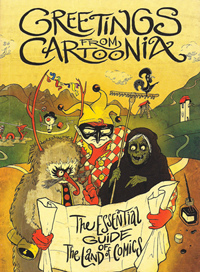
Greetings from Cartoonia


So – here is the new issue of Stripburger special. Greetings from Cartoonia – the Essential Guide of the Land of Comics sports quite unique idea – gathering artists from different countries and asking them to write down 3 things that are crucial to their home country. Then they swapped those things between different artist and asked them to create a comic about them. Phew. That’s Cartoonia allright. So I got someone’s three things , and somebody else got what I came up with for representation of Poland.
You can see few pages of my contribution here.

Enjoy them in color, because they’re printed in grayscale. But not to worry, I’m pretty sure this comic will end up in a separate, full color album one day. Anyway – it was supposed to be a small comic, but turned out to be a 20-page story. It’s Revolutions – my main comic series. My three objects that I had to base my comic on were: wayside shrine, the neanderthal flute and Janezek of Carniola (who turns out to be the main character of the story). Can’t tell you much more about the story…

In Greetings from Cartoonia, 12 modern comic creators, half of them from Slovenia and the other half from various European countries, entered a colorful comic-book-styled intercultural dialogue. The results of this irresponsible behavior are fantasy-filled postcards from the involved countries that don’t pay attention to stereotypes. Slovene authors used their foreign colleagues’ homelands (Italy, Finland, Norway, Poland, Portugal and Romania) as motifs for their comics. Slovenia was used in the same manner by other artists. All authors have used ‘objects of inspiration’ gathered from the cultural treasuries of the involved countries. Among these are architectural types, animal species, car models, traditional folk products, mythological beings and so on. Each artist created a comic story that takes place in the chosen land based on a handful of objects typical for that country. The emerged comic-portraits of the countries quickly got out of hand and mutated to Cartoonia, a completely new, original trans-national entity. A safe haven for those that think the world lacks sympathy for comics, an art form they create or worship. The book is an indispensable guide to this unpredictable, sometimes dangerous, wonderfully bizarre and bizarrely wonderful country.

That was an official promo that I found on Top Shelf’s website. The book came to me in a nice package with lots of additional stuff:

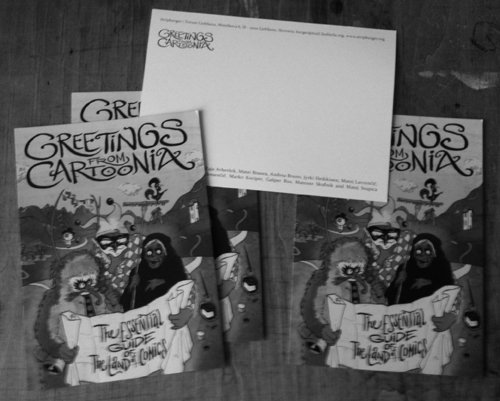
cartoonia_postcards

Cartoonia postcards. Those sheets of paper were used for twitting before the twitter was invented. It’s quite the same, only in real life. People used to send them to each other from vaactions or trips to foreign countries, as in you go somewhere, buy a postcard there and send it back home to your folks to let them know how good you have, and they would get it and envy you.

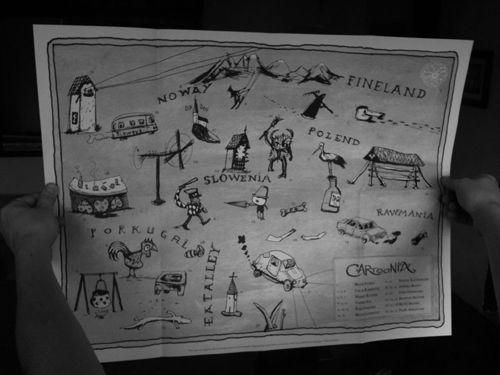
cartoonia_mapa

There’s also this big map of Cartoonia with all objects indicated as long with names of countries they’re from (countries’ names are purposely misspelled to indicate the fantasy nature of the whole project).

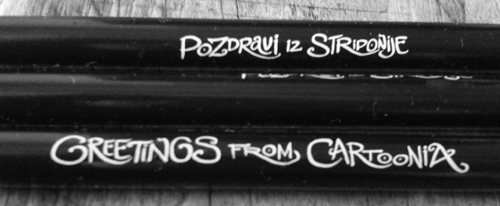
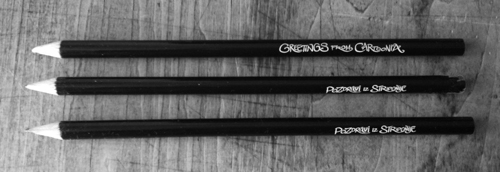
cartoonia_pencils1

cartoonia_pencils2

Cartoonia pencils, unfortunately they came too late for being actual tools in the creation of Cartoonia comics. But they’ll probably be used in next projects, mine for sure, as well as other comic artists that took part in this project. So there will be a itsy bitsy tiny bit of Cartoonia in upcoming comic books from all over Europe. That’s what I think.

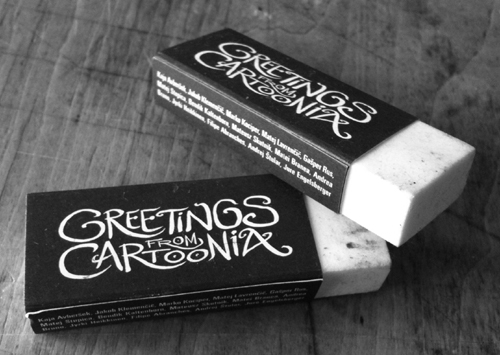
cartoonia_erasers

And there are also Cartoonia erasers. It’s a piece of rubber used to ctrl+Z when you’re drawing on an actual paper. But it can only remove the pencil featured above as I assume, so it’s like really old-timey ctrl+Z. But still. You can correct your errors to some extent with this item. Not that I make errors. But still.

And there was this extra package:

cartoonia_pack1

cartoonia_pack2

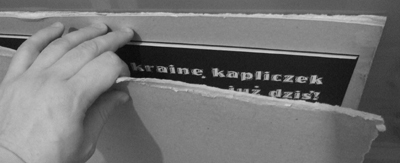
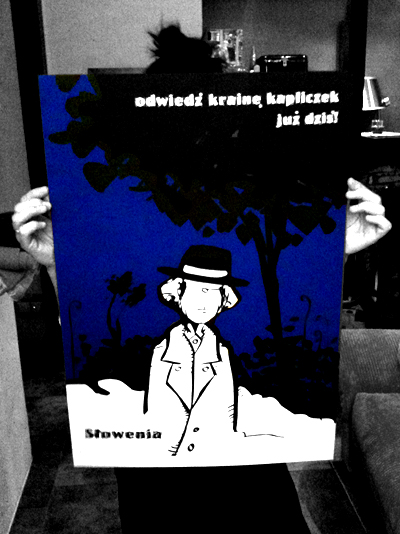
Inside there were 20 copies of a  poster I created for Cartoonia. There are only 40 copies in existence, and the other 20 will be available for purchase. Each artist was supposed to create one, and they printed those using an old method of screen printing (40 copies each). This method is so old that even I can’t explain you what that is. But here’s the poster:

cartoonia_poster


Oscar 2010: Animated Short Film Semi-Finalists


The Academy of Motion Picture Arts and Sciences has announced the 10 semi-finalists in the animated short film category of the 2010 Academy Awards. Thirty-seven entries had originally qualified in the category. And the Kinematograph is one of the semi-finalists. ;)


interview for Casual Girl Gamer


Mateusz Skutnik is a rarity: a gifted artist who is also a skilled coder. He is responsible for some of the most beautiful casual games on the web.

There are two types of artist. The first sort can spend an age on a work of art, painstakingly, bit by tiny bit, building it up until, finally, often years later, they deem it ready for public consumption. And then there are those rare individuals who are blessed with such an abundance of talent that they can turn around wonderful artworks in the time it takes some of us to read a book.

In the casual gaming world, Mateusz Skutnik is undoubtedly one of the latter. Over the past few years, his output of games has been nothing short of phenomenal. Eight games in his hugely popular Submachine point-and-click series, no less then 12 Ten-Gnomes games (quirky takes on the hidden object genre), two editions of the much-acclaimed Daymare Town series, three Covert Front games, and that’s before we even get on to some of his lesser known works, including my personal favourites, the Squirrel games, of which there were more than 25 at last count.

And we are not talking low production value games here. His games are notable for their brilliant artwork, gripping storylines and imaginative reinventions of existing genres. Mateusz is that rare specimen, a gifted artist who also has the wherewithal to write computer programs and market his creations. Until relatively recently, he created the majority of his games single-handedly, doing all the graphics and programming himself. With growing recognition of his work, Mateusz quit his regular job a year ago to focus on his gaming business. He now runs a small game studio – Pastel Games – with Karol Konwerski.

Your output of new games over the past few years has been nothing short of phenomenal. And you do all the graphics as well as the programming. Do you ever sleep?

Umm, sure. It’s not like all those were made simultaneously. For example it took almost two years between Covert Front 2 and 4, and one-and-a-half years between Submachine 5 and 6. Besides, developing doesn’t take that long. To create a game from scratch I need about three months, so it leaves more than enough time to think all [the game] stories through, create a game and have a normal life afterwards.

Where do you get your inspiration for your games?

Everything and nothing. In 10 Gnomes it was the surrounding that I was setting the game in. Sometimes it takes just good sounds or ambients to spawn an idea, sometimes something I see in a movie or TV.

Your games are notable for their brilliant unique graphics. How did you become such a great illustrator?

Years of training. Twenty years of drawing comics, five years of learning how to program these things. There’s no way around it. Time is the answer.

Do you think games can be considered to be art?

10 Gnomes received a Storm of the Year Award in 2008 in the multimedia category. That’s an art award. Does that answer your question?

What are you working on at the moment?

Daymare Town 3 point and click game, and trying to get on track with a new Revolutions comic album, but that’s on a hold right now.

Which of your games are you most proud of?

Can’t judge. There’s no favourite, besides they’re all different and incomparable really.

Is it possible to make a good living out of developing casual games?

Yes. A year ago I quit my regular job and I’m still alive today. That proves the point.

You have recently moved into iPhone development. How does developing games for the iPhone differ from creating Flash games?

Teamwork, proper programmers, graphic and level designers, project managers. Kind of professional compared to one-man developing process.

Are their any game developers whose work you particularly admire?

All stuff made by Wada Nanahiro, Amanita Design and Ferry Halim.

What are your plans for the future?

I want to draw a full comic book next year. Concerning games – probably new Covert Front, Submachine and Daymare Town. The usual point and click trinity.

Tasha Granger